Amazon Coupons
Vipon > V Show > Grad PLUS Grandfathering Rules: Which Borrowers Keep Access? Share great deals & products and save together.

Grad PLUS Grandfathering Rules: Which Borrowers Keep Access?

2026-06-18 07:44:25
Report

The end of Grad PLUS loans has created a wave of confusion among graduate students. One of the most common questions right now is simple: Am I considered a legacy borrower, or do the new rules apply to me?

The answer matters because students who qualify for grandfathering may continue accessing the older federal borrowing framework for a limited time, while new borrowers will face stricter annual and lifetime loan caps starting July 1, 2026. Understanding where you stand could affect everything from your degree timeline to your funding strategy.

The good news is that the rules are clearer than many students realize. The challenge is knowing which details determine your status.


What Makes You a Legacy Borrower?

The key distinction comes down to timing and continuity.

Students who received qualifying federal graduate loans before July 1, 2026, may be eligible for transition protections under the new federal framework. These protections generally allow borrowers to continue under the previous lending structure for a limited period, provided they remain enrolled in the same academic program at the same institution.

Think of it like keeping an existing mobile phone contract. If you continue under the same agreement, you may retain older benefits. The moment you switch plans, many of those benefits disappear.

For graduate borrowers, three conditions typically matter:

  • A federal graduate loan was disbursed before July 1, 2026.
  • The student remains in the same academic program.
  • The student remains enrolled at the same institution.

Students meeting these requirements may continue receiving funding under the transition rules until program completion or the applicable sunset deadline, which many summaries place around the 2028–29 academic year.

When the New Grad PLUS Rules Apply

Students entering graduate or professional programs for the first time after July 1, 2026, should generally expect the new borrowing limits to apply immediately.

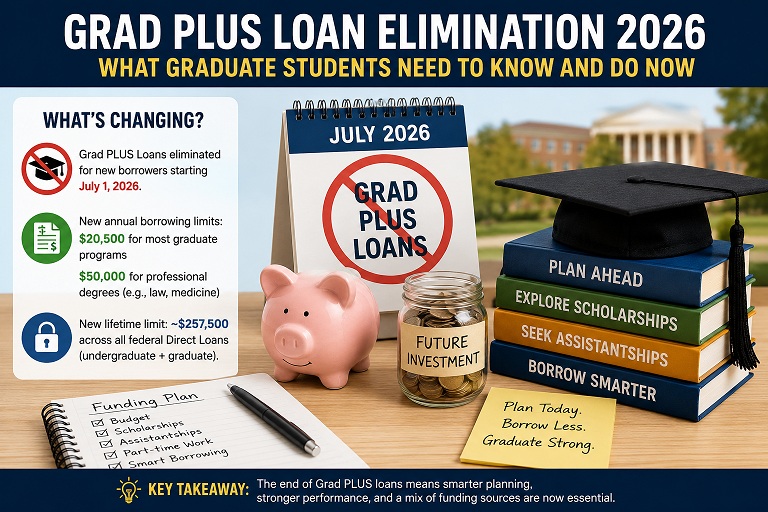
Under the updated system, Grad PLUS loans are eliminated for new borrowers. Instead, graduate students rely primarily on Direct Unsubsidized Loans, which carry annual and aggregate borrowing caps. Most graduate programs are expected to be limited to approximately $20,500 annually and $100,000 in aggregate borrowing, while designated professional programs may have higher limits.

This shift is significant because many graduate programs cost far more than the new federal limits cover. MBA, law, medical, and specialized master's students often relied on Grad PLUS loans to bridge the gap between federal loan limits and actual educational expenses.

As a result, determining whether you qualify for grandfathering could mean the difference between maintaining access to previous funding options and needing to build a new financing plan.

Common Situations That Can Affect Grandfathering Status

Many students assume that once they qualify as a legacy borrower, that protection automatically follows them everywhere. Unfortunately, that is not always the case.

Changing programs is one of the biggest risk factors. A student who completes a master's degree and later begins a different graduate program may be treated as a new borrower. Similarly, moving from one graduate track to another within the same university could potentially trigger the new rules.

Transferring institutions creates another potential issue. Even if the academic field remains the same, moving to a different university may cause a borrower to lose grandfathered status because continuity requirements are no longer satisfied. Leaves of absence can also create uncertainty. Short, approved interruptions may not necessarily cause problems, but lengthy enrollment gaps could affect eligibility. Students considering any extended break should verify their status with their financial aid office before making decisions. International students should be especially careful. Changes in enrollment status often carry both visa implications and financial aid consequences. A decision that seems academic may also affect borrowing eligibility.

How to Verify Your Borrower Status

The safest approach is to stop guessing and confirm your status directly.

Start by reviewing your federal loan history through your Federal Student Aid account. Determine whether you received qualifying graduate loan disbursements before July 1, 2026. Next, examine whether your current enrollment situation matches the same institution and program under which those loans were originally issued.

After gathering that information, schedule a conversation with your university's financial aid office. They can provide institution-specific guidance and explain how transition rules apply to your situation.

This step is particularly important because implementation details may vary, and individual circumstances often involve nuances not covered in general summaries.

Students struggling to understand complex financial aid changes can also benefit from academic and educational support resources. Platforms like Expertsmind.com, which connect learners with subject experts across a wide range of disciplines, can help students stay organized while balancing coursework, financial planning, and graduate school requirements during this transition period.

Planning for the 2029 Sunset Deadline

Even borrowers who qualify for grandfathering should not assume unlimited protection.

Most transition provisions are designed to be temporary. Federal guidance summaries indicate that legacy protections generally expire either when the student completes the program or when the transition window closes, commonly referenced as the 2028–29 academic year.

That means borrowers should begin planning now rather than waiting for protections to expire.

Review your expected graduation date. Calculate how much federal borrowing capacity remains. Consider scholarship opportunities, assistantships, employer tuition benefits, and other funding sources that may become increasingly important as federal borrowing flexibility decreases.

Students who stay proactive will have more options than those who discover funding challenges during their final semesters.

The bottom line is straightforward: if you received graduate federal loans before July 1, 2026, and remain in the same program at the same school, you may qualify as a legacy borrower under the Grad PLUS transition rules. But grandfathering is not permanent, and changes such as transferring, switching programs, or extended enrollment gaps can affect eligibility. With Grad PLUS disappearing for new borrowers, understanding your status today could save significant financial stress tomorrow.

Grad PLUS Grandfathering Rules: Which Borrowers Keep Access?

5
2026-06-18 07:44:25

The end of Grad PLUS loans has created a wave of confusion among graduate students. One of the most common questions right now is simple: Am I considered a legacy borrower, or do the new rules apply to me?

The answer matters because students who qualify for grandfathering may continue accessing the older federal borrowing framework for a limited time, while new borrowers will face stricter annual and lifetime loan caps starting July 1, 2026. Understanding where you stand could affect everything from your degree timeline to your funding strategy.

The good news is that the rules are clearer than many students realize. The challenge is knowing which details determine your status.


What Makes You a Legacy Borrower?

The key distinction comes down to timing and continuity.

Students who received qualifying federal graduate loans before July 1, 2026, may be eligible for transition protections under the new federal framework. These protections generally allow borrowers to continue under the previous lending structure for a limited period, provided they remain enrolled in the same academic program at the same institution.

Think of it like keeping an existing mobile phone contract. If you continue under the same agreement, you may retain older benefits. The moment you switch plans, many of those benefits disappear.

For graduate borrowers, three conditions typically matter:

  • A federal graduate loan was disbursed before July 1, 2026.
  • The student remains in the same academic program.
  • The student remains enrolled at the same institution.

Students meeting these requirements may continue receiving funding under the transition rules until program completion or the applicable sunset deadline, which many summaries place around the 2028–29 academic year.

When the New Grad PLUS Rules Apply

Students entering graduate or professional programs for the first time after July 1, 2026, should generally expect the new borrowing limits to apply immediately.

Under the updated system, Grad PLUS loans are eliminated for new borrowers. Instead, graduate students rely primarily on Direct Unsubsidized Loans, which carry annual and aggregate borrowing caps. Most graduate programs are expected to be limited to approximately $20,500 annually and $100,000 in aggregate borrowing, while designated professional programs may have higher limits.

This shift is significant because many graduate programs cost far more than the new federal limits cover. MBA, law, medical, and specialized master's students often relied on Grad PLUS loans to bridge the gap between federal loan limits and actual educational expenses.

As a result, determining whether you qualify for grandfathering could mean the difference between maintaining access to previous funding options and needing to build a new financing plan.

Common Situations That Can Affect Grandfathering Status

Many students assume that once they qualify as a legacy borrower, that protection automatically follows them everywhere. Unfortunately, that is not always the case.

Changing programs is one of the biggest risk factors. A student who completes a master's degree and later begins a different graduate program may be treated as a new borrower. Similarly, moving from one graduate track to another within the same university could potentially trigger the new rules.

Transferring institutions creates another potential issue. Even if the academic field remains the same, moving to a different university may cause a borrower to lose grandfathered status because continuity requirements are no longer satisfied. Leaves of absence can also create uncertainty. Short, approved interruptions may not necessarily cause problems, but lengthy enrollment gaps could affect eligibility. Students considering any extended break should verify their status with their financial aid office before making decisions. International students should be especially careful. Changes in enrollment status often carry both visa implications and financial aid consequences. A decision that seems academic may also affect borrowing eligibility.

How to Verify Your Borrower Status

The safest approach is to stop guessing and confirm your status directly.

Start by reviewing your federal loan history through your Federal Student Aid account. Determine whether you received qualifying graduate loan disbursements before July 1, 2026. Next, examine whether your current enrollment situation matches the same institution and program under which those loans were originally issued.

After gathering that information, schedule a conversation with your university's financial aid office. They can provide institution-specific guidance and explain how transition rules apply to your situation.

This step is particularly important because implementation details may vary, and individual circumstances often involve nuances not covered in general summaries.

Students struggling to understand complex financial aid changes can also benefit from academic and educational support resources. Platforms like Expertsmind.com, which connect learners with subject experts across a wide range of disciplines, can help students stay organized while balancing coursework, financial planning, and graduate school requirements during this transition period.

Planning for the 2029 Sunset Deadline

Even borrowers who qualify for grandfathering should not assume unlimited protection.

Most transition provisions are designed to be temporary. Federal guidance summaries indicate that legacy protections generally expire either when the student completes the program or when the transition window closes, commonly referenced as the 2028–29 academic year.

That means borrowers should begin planning now rather than waiting for protections to expire.

Review your expected graduation date. Calculate how much federal borrowing capacity remains. Consider scholarship opportunities, assistantships, employer tuition benefits, and other funding sources that may become increasingly important as federal borrowing flexibility decreases.

Students who stay proactive will have more options than those who discover funding challenges during their final semesters.

The bottom line is straightforward: if you received graduate federal loans before July 1, 2026, and remain in the same program at the same school, you may qualify as a legacy borrower under the Grad PLUS transition rules. But grandfathering is not permanent, and changes such as transferring, switching programs, or extended enrollment gaps can affect eligibility. With Grad PLUS disappearing for new borrowers, understanding your status today could save significant financial stress tomorrow.

Comments

Recommended

AutoML vs Traditional Machine Learning: Which Skills Matter in 2026?
clairemiller069
28
Online Credentials in 2026: Why Universities Are Investing
clairemiller069
15
Statistics Assignment Help: Expert Guidance for Academic Success
clairemiller069
600
Download Vipon App to get great deals now!
...
Amazon Coupons Loading…