Amazon Coupons
Vipon > V Show > How a Multihull Sailboat for Sale Performs Without an Engine in Real Wind? Share great deals & products and save together.

How a Multihull Sailboat for Sale Performs Without an Engine in Real Wind?

2025-08-13 05:45:00
Report


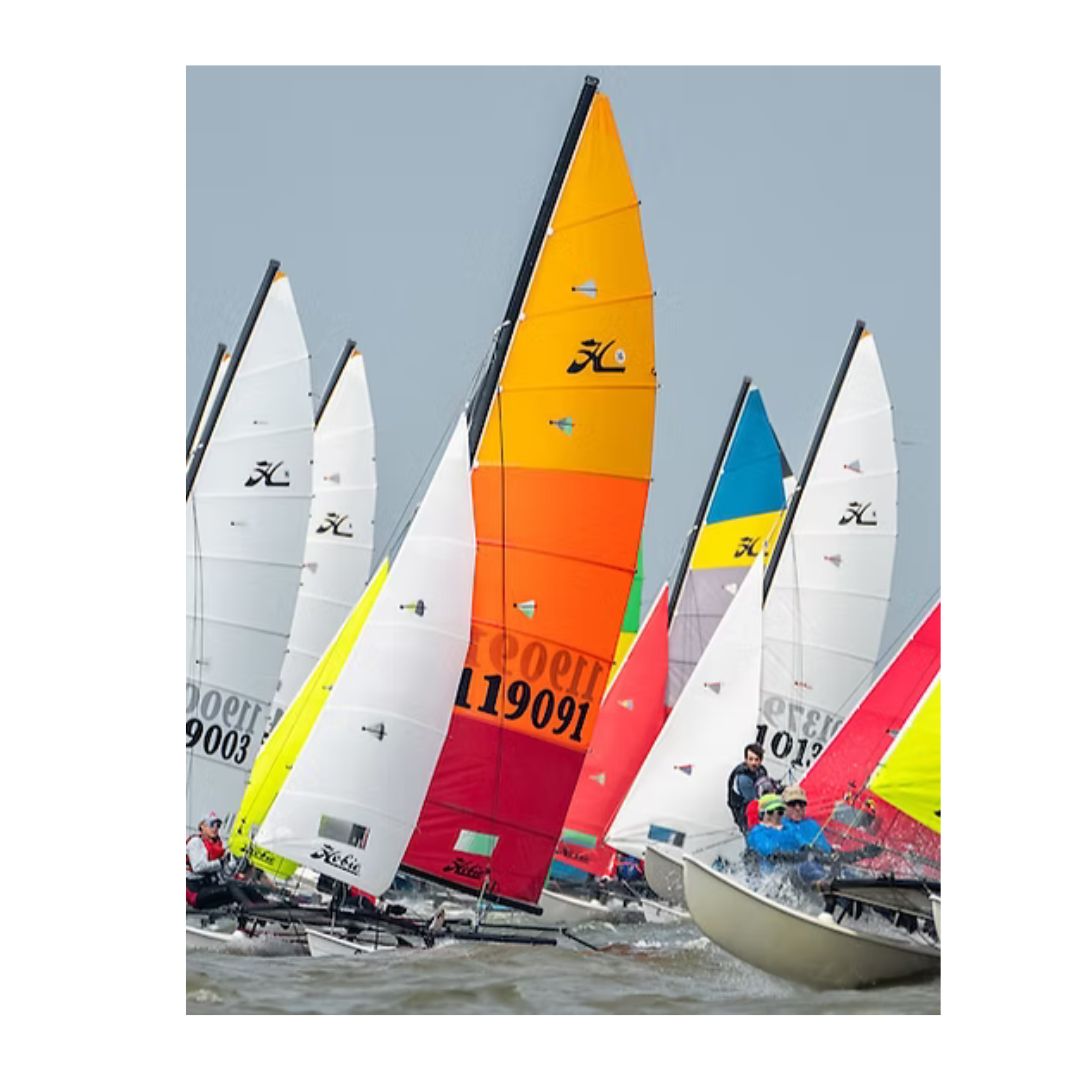
Multihull sailboats, such as catamarans and trimarans are popular for their lightweight builds, balanced hulls, and impressive sailing performance. If you're looking for a multihull sailboat for sale in Mississippi, a common question arises: how well do these boats perform in real wind without an engine.  When the wind increases, multihull speed increases, up to a certain point at which danger of flipping over makes is necessary to reduce sail area (reef the mainsail) or at least let the mainsail out and spill some wind.   The same is true for monohull boats that do not have ballast in the keel.  A Mono hull with ballast in the keel will  not increase in speed beyond it’s calculated hull speed.  It will just heel over more and more until sail area is reduced.  As a monohull heels over more, air flow across the sail is more from the bottom of the sail to the top, rather than from the leading edge to the trailing edge of the sail.  This actually causes the ballasted monohull to slow down.  The sail is like a vertical wing and it generates lift when the air flow is horizontal from the leading edge of the sail (luff) to the trailing edge of the sail (leech).

1. Real-World Wind Response: Balance and Trim Matter Most

Multihulls are prized for their ability to stay almost level in the water. With two or three hulls spread wide, they resist heeling unlike monohulls, which often heel dramatically when powered by the wind. In 10–15 knots of breeze, even small multihulls can maintain a steady heading, gliding comfortably over choppy waters.

Sailors must manage sail trim, weight distribution, and rudder sensitivity. Gusts or directional shifts in the wind require active adjustment, making it an interactive and technical sailing experience. 

2. Speed and Simplicity Go Hand in Hand

These boats are built for efficiency, not brute strength. Their narrow, hydrodynamic hulls and lightweight frames allow for greater acceleration even in moderate wind. On average, many small multihulls can reach speeds of 10–14 knots when the wind cooperates.

Without an engine or heavy fuel systems onboard, there's less weight dragging the boat down. This translates to more responsiveness, smoother movement through the water, and a satisfying sense of connection to the natural elements. 


3. Tacking and Manoeuvring: A Sailor’s Game

Turning and docking without an engine demands awareness, timing, and planning. In light air, tacking becomes more reliant on maintaining momentum through the turn.  Don’t over steer when tacking.  The rudder acts more and more like a break as it is moved farther from the center line of hull of  the boat.  Only move the rudder enough to turn the boat through the eye of the wind.  Sometimes multihull boats are so light that they don’t have enough inertia  to carry their bow through the eye of the wind.  If that happens you can always jibe so the stern goes through the eye of the wind, and change tacks that way.

When approaching a dock or beach, the sailor must carefully consider wind angle and current. Fortunately, the shallow draft of most multihulls makes them capable of pulling in close to shore, offering more flexibility than deeper-keel boats.  If trying to land on a beach when the wind is off shore, raise the dagger board half way,  and then sail until you are in  less that waist deep water.  Release the main sheet and jib sheet.  Then you can jump off the bow and hold the boat by the bow in shallow water.  Don’t try to hold the boat by the stern.  It will sail away dragging you along behind it.  If trying to land at dock under sail, try to land at a dock that is aligned with the wind direction so you can use the wind to stop the boat, by turning into the wind.  If no docks are aligned with the wind, Lower the sails when you are sure you are going fast enough to coast the rest of the way to the dock.

4. Buying Considerations: Used Models Offer Value

There’s a strong market for used multihull sailboats for sale, especially for sailors who appreciate simplicity and functionality. When shopping for a used multihull, factors like sail condition, hull integrity, and weight balance are critical. A well-maintained boat can offer just as much performance as a new model, sometimes even more, if it’s been customized or refined by previous owners.

5. Wind Management and Weight Shifting

In gusty conditions, balance is key. Sailors often shift their weight fore and aft, or from hull to hull, to help the boat maintain speed and stability.

Reducing sail area or reefing during strong wind is a common tactic. Adjustments to the jib or mainsail can help you control the boat’s angle to the wind. These small changes make a big difference, ensuring safe and efficient sailing even as conditions change.

End Summary 

If you're in the market for a multihull sailboat for sale in Mississippi, knowing how it performs. These boats offer a clean, engine-free experience built on precision, balance, and skill. If buying new or browsing multihull sailboats for sale used, you'll find that these vessels bring unmatched responsiveness and connection to the wind. You really only need the engine if the wind dies or if you are entering a marina surrounded by buildings the block the wind.  In these cases it is good to have a paddle available to keep the boat moving.

How a Multihull Sailboat for Sale Performs Without an Engine in Real Wind?

221
2025-08-13 05:45:00


Multihull sailboats, such as catamarans and trimarans are popular for their lightweight builds, balanced hulls, and impressive sailing performance. If you're looking for a multihull sailboat for sale in Mississippi, a common question arises: how well do these boats perform in real wind without an engine.  When the wind increases, multihull speed increases, up to a certain point at which danger of flipping over makes is necessary to reduce sail area (reef the mainsail) or at least let the mainsail out and spill some wind.   The same is true for monohull boats that do not have ballast in the keel.  A Mono hull with ballast in the keel will  not increase in speed beyond it’s calculated hull speed.  It will just heel over more and more until sail area is reduced.  As a monohull heels over more, air flow across the sail is more from the bottom of the sail to the top, rather than from the leading edge to the trailing edge of the sail.  This actually causes the ballasted monohull to slow down.  The sail is like a vertical wing and it generates lift when the air flow is horizontal from the leading edge of the sail (luff) to the trailing edge of the sail (leech).

1. Real-World Wind Response: Balance and Trim Matter Most

Multihulls are prized for their ability to stay almost level in the water. With two or three hulls spread wide, they resist heeling unlike monohulls, which often heel dramatically when powered by the wind. In 10–15 knots of breeze, even small multihulls can maintain a steady heading, gliding comfortably over choppy waters.

Sailors must manage sail trim, weight distribution, and rudder sensitivity. Gusts or directional shifts in the wind require active adjustment, making it an interactive and technical sailing experience. 

2. Speed and Simplicity Go Hand in Hand

These boats are built for efficiency, not brute strength. Their narrow, hydrodynamic hulls and lightweight frames allow for greater acceleration even in moderate wind. On average, many small multihulls can reach speeds of 10–14 knots when the wind cooperates.

Without an engine or heavy fuel systems onboard, there's less weight dragging the boat down. This translates to more responsiveness, smoother movement through the water, and a satisfying sense of connection to the natural elements. 


3. Tacking and Manoeuvring: A Sailor’s Game

Turning and docking without an engine demands awareness, timing, and planning. In light air, tacking becomes more reliant on maintaining momentum through the turn.  Don’t over steer when tacking.  The rudder acts more and more like a break as it is moved farther from the center line of hull of  the boat.  Only move the rudder enough to turn the boat through the eye of the wind.  Sometimes multihull boats are so light that they don’t have enough inertia  to carry their bow through the eye of the wind.  If that happens you can always jibe so the stern goes through the eye of the wind, and change tacks that way.

When approaching a dock or beach, the sailor must carefully consider wind angle and current. Fortunately, the shallow draft of most multihulls makes them capable of pulling in close to shore, offering more flexibility than deeper-keel boats.  If trying to land on a beach when the wind is off shore, raise the dagger board half way,  and then sail until you are in  less that waist deep water.  Release the main sheet and jib sheet.  Then you can jump off the bow and hold the boat by the bow in shallow water.  Don’t try to hold the boat by the stern.  It will sail away dragging you along behind it.  If trying to land at dock under sail, try to land at a dock that is aligned with the wind direction so you can use the wind to stop the boat, by turning into the wind.  If no docks are aligned with the wind, Lower the sails when you are sure you are going fast enough to coast the rest of the way to the dock.

4. Buying Considerations: Used Models Offer Value

There’s a strong market for used multihull sailboats for sale, especially for sailors who appreciate simplicity and functionality. When shopping for a used multihull, factors like sail condition, hull integrity, and weight balance are critical. A well-maintained boat can offer just as much performance as a new model, sometimes even more, if it’s been customized or refined by previous owners.

5. Wind Management and Weight Shifting

In gusty conditions, balance is key. Sailors often shift their weight fore and aft, or from hull to hull, to help the boat maintain speed and stability.

Reducing sail area or reefing during strong wind is a common tactic. Adjustments to the jib or mainsail can help you control the boat’s angle to the wind. These small changes make a big difference, ensuring safe and efficient sailing even as conditions change.

End Summary 

If you're in the market for a multihull sailboat for sale in Mississippi, knowing how it performs. These boats offer a clean, engine-free experience built on precision, balance, and skill. If buying new or browsing multihull sailboats for sale used, you'll find that these vessels bring unmatched responsiveness and connection to the wind. You really only need the engine if the wind dies or if you are entering a marina surrounded by buildings the block the wind.  In these cases it is good to have a paddle available to keep the boat moving.

Comments

Recommended

Set Sail for Easy Weekend Adventures with Small Trailerable Sailboats
V_C2SESI4B
832.3k
Traverse New Waters with a New Sailboat for Every Budget
V_C2SESI4B
3439.6k
Complete BBMP E-Khata Services in Bengaluru | Apply & Transfer
VIPON_711734676627
37
Download Vipon App to get great deals now!
...
Amazon Coupons Loading…