Exclusive
To get our best deals and discounts Subscribe Below!
Continue As A Guest
Continue As A Guest
Updata
Hey! Thank you so much for your support and quality posts for V Show!
And congratulations on becoming our Vipon Associated Editor.
From now on, in addition to getting 10 points for each post (up to 30 points daily), we will regularly review each of your articles, and each approved article (tagged with Featured label) will be paid an additional $50.
Note: Not all articles you posted will get $50, only those that meet our requirements will be paid, and articles or contents that do not meet the requirements will be removed.
Please continue to produce high quality content for organic likes. Our shoppers love seeing your stories & posts!
Congratulations! Your V SHOW post Planting Tips has become our Featured content, we will pay $50 for this post. Please check on your balance. Please continue to produce high quality original content!
In today’s digital world, screens are everywhere. From online classes to interactive games, children spend more time in front of screens than ever before. For many parents and educators, this shift brings both opportunity and concern. The challenge is no longer about removing screens completely, but about using them wisely to support learning, creativity, and emotional growth.
Experts in child development emphasize that when screen time includes storytelling, problem-solving, and creative play, it can become a valuable part of a child’s education. With modern educational technology and AI-powered tools, it’s now possible to make screen time engaging, personalized, and enriching. Let’s explore five practical ways to make screen time truly educational in 2025.

Storytelling has always been one of the most powerful tools for learning. According to the Harvard Graduate School of Education, stories help children understand emotions, build empathy, and strengthen memory. Digital storytelling takes this tradition forward by allowing kids to participate in the story creation process rather than just listening passively.
Modern platforms use AI book generators and interactive storytelling apps to help kids imagine, write, and design their own stories. This process supports language development, creativity, and self-expression. Parents and teachers can guide children to design their own story characters, shaping their imagination into something meaningful.
You can explore how children create unique characters that reflect their ideas and emotions at KidScribe.ai. Research also shows that story-based learning connects directly with cognitive growth, often referred to as the Science Behind Stories, making it a fun and effective educational method.
Not all screen time is equal. Passive activities, such as endless video streaming, have little educational value. However, interactive digital tools can transform screens into spaces for problem-solving and active learning.
Effective educational technology encourages children to think, respond, and create. Whether it’s a reading app that adapts to their skill level or a creative writing platform that helps them tell a story, active engagement makes all the difference.
A study by Common Sense Media found that children who use interactive educational apps show improved focus, reasoning, and motivation to learn compared to those who only consume entertainment-based media. Parents should choose apps that combine storytelling, visual learning, and feedback, as these support literacy and emotional understanding.
Digital and physical learning don’t have to be separate. In fact, combining both can lead to stronger results. For example, if a child watches an educational video about animals, parents can encourage them to draw those animals or act out a mini story afterward. This kind of imaginative play strengthens memory and reinforces lessons learned online.
Experts at MIT Media Lab suggest that hybrid learning — mixing online creativity with offline play — helps children connect ideas across contexts. When kids use storytelling tools or AI-based platforms to generate new ideas, they can apply those ideas to crafts, writing, or discussions. The key is balance: screen time should spark curiosity, not replace hands-on experiences.
Artificial Intelligence is reshaping how children learn and create. Tools like AI book generators and adaptive learning apps give kids the power to bring their ideas to life. By turning imagination into stories, songs, or visuals, children can express themselves in entirely new ways.
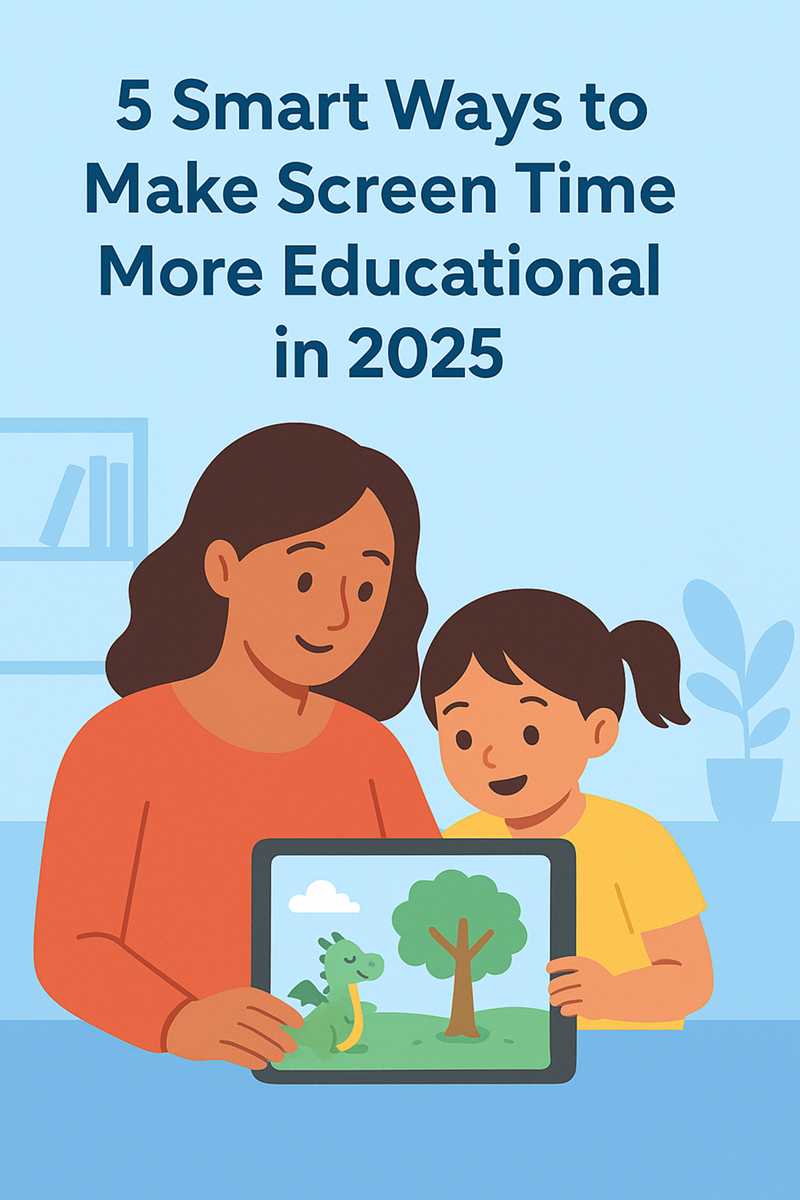
For parents, the focus should be on guided exploration. Instead of letting kids explore technology alone, join them in creating stories or learning activities. Discuss their choices, help them build narratives, and encourage them to reflect on what they’ve made. This shared engagement promotes emotional bonding and builds confidence.
The American Academy of Pediatrics recommends co-viewing digital content whenever possible. When adults participate, screen time becomes a space for conversation, empathy, and learning — not isolation.
While time limits are important, the quality of screen time matters even more. Parents and educators can follow the “Three Cs” framework to make screen use more meaningful and educational:
Content – What is being watched or used?
Look for high educational value. Choose programs, apps, or games that promote learning, creativity, and storytelling rather than passive entertainment.
Context – Who is the child engaging with?
Aim for co-viewing or shared activity. When parents or siblings participate, children gain a deeper understanding of what they see and can apply it in real life.
Child – How does the activity suit their age and development level?
Ensure the activity matches their maturity, attention span, and interests. Personalized or adaptive tools can make learning more engaging for each individual child.
Educational content that encourages thinking, creativity, and interaction provides long-term benefits. Setting clear goals before screen sessions — such as learning a new word, creating a character, or completing a story — helps children focus on outcomes rather than just time spent.
Studies from the University of Washington highlight that when children are involved in meaningful digital activities, their comprehension and attention span improve, even with moderate screen exposure.
Parents should talk with their children about what they’ve watched or created. Asking open-ended questions like “What was your favorite part of the story?” helps turn screen time into a shared educational journey.
into a shared educational journey.
Q1: How much screen time is healthy for children?
The American Academy of Pediatrics recommends no more than one hour of high-quality screen time per day for children aged 2–5, with consistent parental involvement. For older kids, screen use should be balanced with offline activities, reading, and physical play.
Q2: Can AI tools truly support child development?
Yes, when used responsibly. Studies from MIT Media Lab show that AI-based storytelling and learning tools can improve reading motivation, empathy, and problem-solving skills.
Q3: What types of apps or platforms are best for reading motivation?
Look for platforms that encourage storytelling, creativity, and reflection. Apps that adapt to a child’s interests and allow for personalized story creation often lead to better engagement.
Q4: How can parents balance entertainment and learning?
Set specific time blocks for educational use and include your child in choosing what they watch or play. Blending structured learning with free creative exploration is the most effective strategy.
Screen time doesn’t have to be something parents fear. When guided thoughtfully, it can become a source of creativity, curiosity, and confidence. By choosing educational technologies, encouraging storytelling, and prioritizing quality interactions, families can turn digital moments into lasting learning experiences.
In 2025, tools like AI book generators, creative storytelling apps, and interactive learning games are redefining how children learn. The goal isn’t to eliminate screens but to use them wisely — helping every child imagine, create, and grow in a digital world that values both innovation and empathy.
Author Bio
Dr. Peter is a Child Development and Educational Technology Specialist who researches how digital tools can enhance creativity and literacy in young learners. With years of experience observing children interact with stories and technology, he helps parents and educators use AI responsibly to create meaningful reading experiences that nurture imagination and learning.
In today’s digital world, screens are everywhere. From online classes to interactive games, children spend more time in front of screens than ever before. For many parents and educators, this shift brings both opportunity and concern. The challenge is no longer about removing screens completely, but about using them wisely to support learning, creativity, and emotional growth.
Experts in child development emphasize that when screen time includes storytelling, problem-solving, and creative play, it can become a valuable part of a child’s education. With modern educational technology and AI-powered tools, it’s now possible to make screen time engaging, personalized, and enriching. Let’s explore five practical ways to make screen time truly educational in 2025.

Storytelling has always been one of the most powerful tools for learning. According to the Harvard Graduate School of Education, stories help children understand emotions, build empathy, and strengthen memory. Digital storytelling takes this tradition forward by allowing kids to participate in the story creation process rather than just listening passively.
Modern platforms use AI book generators and interactive storytelling apps to help kids imagine, write, and design their own stories. This process supports language development, creativity, and self-expression. Parents and teachers can guide children to design their own story characters, shaping their imagination into something meaningful.
You can explore how children create unique characters that reflect their ideas and emotions at KidScribe.ai. Research also shows that story-based learning connects directly with cognitive growth, often referred to as the Science Behind Stories, making it a fun and effective educational method.
Not all screen time is equal. Passive activities, such as endless video streaming, have little educational value. However, interactive digital tools can transform screens into spaces for problem-solving and active learning.
Effective educational technology encourages children to think, respond, and create. Whether it’s a reading app that adapts to their skill level or a creative writing platform that helps them tell a story, active engagement makes all the difference.
A study by Common Sense Media found that children who use interactive educational apps show improved focus, reasoning, and motivation to learn compared to those who only consume entertainment-based media. Parents should choose apps that combine storytelling, visual learning, and feedback, as these support literacy and emotional understanding.
Digital and physical learning don’t have to be separate. In fact, combining both can lead to stronger results. For example, if a child watches an educational video about animals, parents can encourage them to draw those animals or act out a mini story afterward. This kind of imaginative play strengthens memory and reinforces lessons learned online.
Experts at MIT Media Lab suggest that hybrid learning — mixing online creativity with offline play — helps children connect ideas across contexts. When kids use storytelling tools or AI-based platforms to generate new ideas, they can apply those ideas to crafts, writing, or discussions. The key is balance: screen time should spark curiosity, not replace hands-on experiences.
Artificial Intelligence is reshaping how children learn and create. Tools like AI book generators and adaptive learning apps give kids the power to bring their ideas to life. By turning imagination into stories, songs, or visuals, children can express themselves in entirely new ways.
For parents, the focus should be on guided exploration. Instead of letting kids explore technology alone, join them in creating stories or learning activities. Discuss their choices, help them build narratives, and encourage them to reflect on what they’ve made. This shared engagement promotes emotional bonding and builds confidence.
The American Academy of Pediatrics recommends co-viewing digital content whenever possible. When adults participate, screen time becomes a space for conversation, empathy, and learning — not isolation.
While time limits are important, the quality of screen time matters even more. Parents and educators can follow the “Three Cs” framework to make screen use more meaningful and educational:
Content – What is being watched or used?
Look for high educational value. Choose programs, apps, or games that promote learning, creativity, and storytelling rather than passive entertainment.
Context – Who is the child engaging with?
Aim for co-viewing or shared activity. When parents or siblings participate, children gain a deeper understanding of what they see and can apply it in real life.
Child – How does the activity suit their age and development level?
Ensure the activity matches their maturity, attention span, and interests. Personalized or adaptive tools can make learning more engaging for each individual child.
Educational content that encourages thinking, creativity, and interaction provides long-term benefits. Setting clear goals before screen sessions — such as learning a new word, creating a character, or completing a story — helps children focus on outcomes rather than just time spent.
Studies from the University of Washington highlight that when children are involved in meaningful digital activities, their comprehension and attention span improve, even with moderate screen exposure.
Parents should talk with their children about what they’ve watched or created. Asking open-ended questions like “What was your favorite part of the story?” helps turn screen time into a shared educational journey.
into a shared educational journey.
Q1: How much screen time is healthy for children?
The American Academy of Pediatrics recommends no more than one hour of high-quality screen time per day for children aged 2–5, with consistent parental involvement. For older kids, screen use should be balanced with offline activities, reading, and physical play.
Q2: Can AI tools truly support child development?
Yes, when used responsibly. Studies from MIT Media Lab show that AI-based storytelling and learning tools can improve reading motivation, empathy, and problem-solving skills.
Q3: What types of apps or platforms are best for reading motivation?
Look for platforms that encourage storytelling, creativity, and reflection. Apps that adapt to a child’s interests and allow for personalized story creation often lead to better engagement.
Q4: How can parents balance entertainment and learning?
Set specific time blocks for educational use and include your child in choosing what they watch or play. Blending structured learning with free creative exploration is the most effective strategy.
Screen time doesn’t have to be something parents fear. When guided thoughtfully, it can become a source of creativity, curiosity, and confidence. By choosing educational technologies, encouraging storytelling, and prioritizing quality interactions, families can turn digital moments into lasting learning experiences.
In 2025, tools like AI book generators, creative storytelling apps, and interactive learning games are redefining how children learn. The goal isn’t to eliminate screens but to use them wisely — helping every child imagine, create, and grow in a digital world that values both innovation and empathy.
Author Bio
Dr. Peter is a Child Development and Educational Technology Specialist who researches how digital tools can enhance creativity and literacy in young learners. With years of experience observing children interact with stories and technology, he helps parents and educators use AI responsibly to create meaningful reading experiences that nurture imagination and learning.
Are you sure you want to stop following?
Loading…
Congrats! You are now a member!
Start requesting vouchers for promo codes by clicking the Request Deal buttons on products you want.
Sellers of Amazon products are required to sign in at www.amztracker.com
More information about placing your products on this site can be found here.
Are you having problems purchasing a product with the supplied voucher? If so, please contact the seller via the supplied email.
Also, please be patient. Sellers are pretty busy people and it can take awhile to respond to your emails.
After 2 days of receiving a voucher you can report the seller to us (using the same button) if you cannot resolve this issue with the seller.
For more information click here.
We have taken note and will also convey the problems to the seller on your behalf.
Usually the seller will rectify it soon, we suggest now you can remove this request from your dashboard and choose another deal.
If you love this deal most, we suggest you can try to request this deal after 2 days.
This will mark the product as purchased. The voucher will be permanently removed from your dashboard shortly after. Are you sure?
You are essentially competing with a whole lot of other buyers when requesting to purchase a product. The seller only has a limited amount of vouchers to give out too.
Select All Groups
✕
Adult Products
Arts, Crafts & Sewing
Automotive & Industrial
Beauty & Grooming
Cell Phones & Accessories
Electronics & Office
Health & Household
Home & Garden
Jewelry
Kitchen & Dining
Men's Clothing & Shoes
Pet Supplies
Sports & Outdoors
Toys, Kids & Baby
Watches
Women's Clothing & Shoes
Other
Adult Products
©Copyright 2026 Vipon All Right Reserved · Privacy Policy · Terms of Service · Do Not Sell My Personal Information
Certain content in this page comes from Amazon. The content is provided as is, and is subject
to change or removal at
any time. Amazon and the Amazon logo are trademarks of Amazon.com,
Inc. or its affiliates.
Comments