Amazon Coupons
Vipon > V Show > Paint Sprayer Maintenance Schedule Contractors Actually Follow Share great deals & products and save together.

Paint Sprayer Maintenance Schedule Contractors Actually Follow

2025-10-26 09:36:06
Report

Professional painting contractors don’t rely on guesswork when it comes to equipment care. A paint sprayer is one of the most expensive and important tools on any job site, and poor maintenance quickly leads to breakdowns, uneven finishes, and lost income. That’s why experienced professionals stick to a paint sprayer maintenance schedule contractors actually follow—a realistic routine that works in day-to-day conditions, not just in manuals.


Why Maintenance Is Non-Negotiable for Contractors

Paint sprayers operate under high pressure and tight tolerances. Even a small amount of dried paint or air leakage can cause major problems. Contractors understand that regular maintenance prevents:

  • Inconsistent spray patterns

  • Sudden pressure drops

  • Costly part replacements

  • Job delays and unhappy clients


Daily Maintenance: What Pros Never Skip

No matter how busy the job is, professional painters always handle these tasks at the end of the day.

Flushing the Sprayer

Paint should never be left inside the system overnight. Contractors flush the sprayer immediately after use:

  • Water for latex and water-based paints

  • Mineral spirits or an approved solvent for oil-based coatings

They continue flushing until the fluid runs completely clear. This single habit prevents most pump and hose failures.

Cleaning the Spray Tip and Gun

Spray tips clog easily and directly affect finish quality. Contractors remove the tip, guard, and gun filter daily and clean them with a soft brush. This avoids tails, spitting, and uneven coverage.

Wiping Down the Unit

A quick wipe-down removes overspray and dust that can block cooling vents or hide leaks. It also makes it easier to spot issues early.


Weekly Maintenance: Preventing Mid-Job Failures

Weekly checks are where experienced contractors stay ahead of problems.

Inspecting and Cleaning Filters

Most professional sprayers have multiple filters, including inlet, manifold, and gun filters. Contractors clean or replace these weekly to maintain steady pressure and flow.

Checking Hoses and Fittings

High-pressure hoses are inspected for soft spots, cracks, and leaks. Loose fittings are tightened carefully, not over-tightened. A failed hose can stop a job instantly and create safety risks.

Lubricating the Pump

Contractors regularly apply throat seal liquid or pump lubricant to keep packings from drying out. This small step significantly extends pump life.


Monthly Maintenance: The Difference Between Pros and Beginners

Monthly maintenance is often skipped by inexperienced users, but professionals know its value.

Inspecting Packings and Seals

Worn packings cause leaks, pressure loss, and pump damage. Contractors inspect these parts monthly and plan rebuilds before complete failure.

Testing Pressure Control

Stable pressure is essential for a consistent finish. Contractors check that the sprayer builds pressure smoothly and holds it without fluctuation.

Electrical and Air System Checks

For electric units, cords and switches are inspected. For pneumatic systems, moisture traps and regulators are checked. Small issues here can shut down a job completely.


Seasonal Maintenance Contractors Rely On

The paint sprayer maintenance schedule contractors actually follow changes slightly with the seasons.

Before Busy Season

Contractors prepare sprayers by replacing worn tips, checking hoses, and servicing pumps. This prevents breakdowns during peak work periods.

End-of-Season Storage

Before long-term storage, professionals fully flush the system, run the pump protector or storage fluid, and store the sprayer in a dry, temperature-stable environment. Improper storage is a common cause of spring startup problems.


Maintenance Based on Sprayer Type

Different sprayers require slightly different care routines.

Airless Paint Sprayers

Contractors using equipment from manufacturers like Graco focus heavily on pump packings, pressure controls, and high-pressure hoses due to the extreme operating pressures.

HVLP Sprayers

With HVLP systems from brands such as Wagner, airflow is critical. Contractors regularly clean turbine filters, air hoses, and nozzles to maintain performance.

Pneumatic Sprayers

Compressed-air systems require frequent moisture control. Professionals drain air compressors, check regulators, and maintain oilers to prevent finish defects.


Parts Contractors Replace Proactively

Rather than waiting for failure, experienced painters replace certain components on a schedule:

  • Spray tips after 40–60 gallons

  • Gun and manifold filters are regularly

  • Pump packings are annually used for heavy use

  • Hoses at the first sign of wear

This proactive approach reduces downtime and emergency repairs.


Common Maintenance Mistakes Professionals Avoid

Contractors with years of experience avoid mistakes that shorten equipment life:

  • Leaving paint in the sprayer overnight

  • Using the wrong solvent

  • Ignoring small leaks

  • Running clogged filters

  • Over-tightening fittings

Avoiding these habits saves both time and money.


A Simple Contractor-Approved Maintenance Routine

Here’s a realistic summary of the paint sprayer maintenance schedule contractors actually follow:

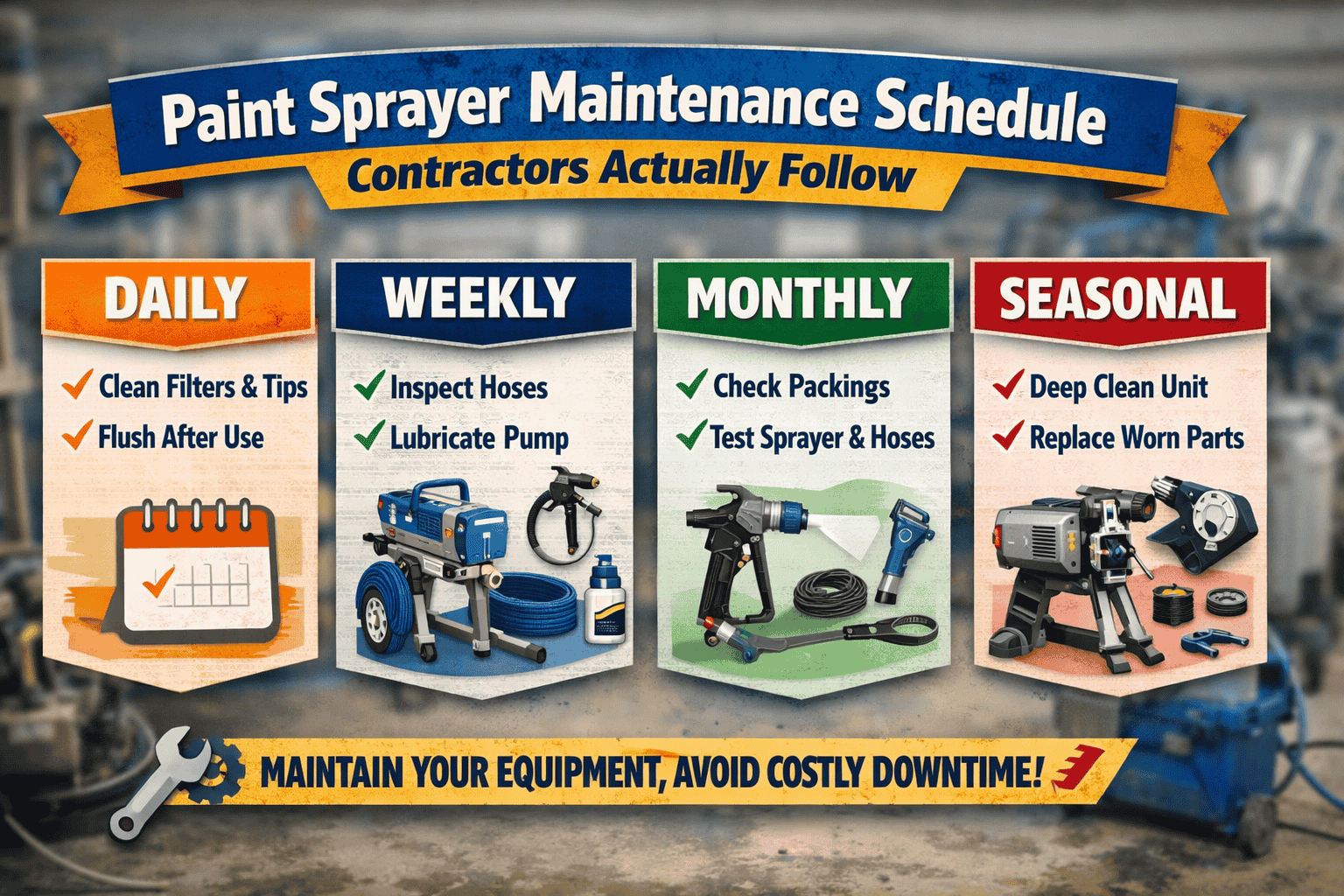
Daily: Flush the system, clean the spray tip and gun, wipe down the unit.
Weekly: Clean filters, inspect hoses, lubricate the pump.
Monthly: Inspect packings, test pressure control, check electrical or air components.
Seasonal: Perform pre-season servicing and proper end-of-season storage.


Final Thoughts

Professional painters don’t overcomplicate maintenance—but they never ignore it. The paint sprayer maintenance schedule contractors actually follow is built around real jobsite demands: fast, practical, and effective.

By following this routine, you’ll get smoother finishes, fewer breakdowns, and a longer lifespan from your equipment. In the long run, consistent maintenance isn’t extra work—it’s how professionals protect their business and reputation.

Paint Sprayer Maintenance Schedule Contractors Actually Follow

331
2025-10-26 09:36:06

Professional painting contractors don’t rely on guesswork when it comes to equipment care. A paint sprayer is one of the most expensive and important tools on any job site, and poor maintenance quickly leads to breakdowns, uneven finishes, and lost income. That’s why experienced professionals stick to a paint sprayer maintenance schedule contractors actually follow—a realistic routine that works in day-to-day conditions, not just in manuals.


Why Maintenance Is Non-Negotiable for Contractors

Paint sprayers operate under high pressure and tight tolerances. Even a small amount of dried paint or air leakage can cause major problems. Contractors understand that regular maintenance prevents:

  • Inconsistent spray patterns

  • Sudden pressure drops

  • Costly part replacements

  • Job delays and unhappy clients


Daily Maintenance: What Pros Never Skip

No matter how busy the job is, professional painters always handle these tasks at the end of the day.

Flushing the Sprayer

Paint should never be left inside the system overnight. Contractors flush the sprayer immediately after use:

  • Water for latex and water-based paints

  • Mineral spirits or an approved solvent for oil-based coatings

They continue flushing until the fluid runs completely clear. This single habit prevents most pump and hose failures.

Cleaning the Spray Tip and Gun

Spray tips clog easily and directly affect finish quality. Contractors remove the tip, guard, and gun filter daily and clean them with a soft brush. This avoids tails, spitting, and uneven coverage.

Wiping Down the Unit

A quick wipe-down removes overspray and dust that can block cooling vents or hide leaks. It also makes it easier to spot issues early.


Weekly Maintenance: Preventing Mid-Job Failures

Weekly checks are where experienced contractors stay ahead of problems.

Inspecting and Cleaning Filters

Most professional sprayers have multiple filters, including inlet, manifold, and gun filters. Contractors clean or replace these weekly to maintain steady pressure and flow.

Checking Hoses and Fittings

High-pressure hoses are inspected for soft spots, cracks, and leaks. Loose fittings are tightened carefully, not over-tightened. A failed hose can stop a job instantly and create safety risks.

Lubricating the Pump

Contractors regularly apply throat seal liquid or pump lubricant to keep packings from drying out. This small step significantly extends pump life.


Monthly Maintenance: The Difference Between Pros and Beginners

Monthly maintenance is often skipped by inexperienced users, but professionals know its value.

Inspecting Packings and Seals

Worn packings cause leaks, pressure loss, and pump damage. Contractors inspect these parts monthly and plan rebuilds before complete failure.

Testing Pressure Control

Stable pressure is essential for a consistent finish. Contractors check that the sprayer builds pressure smoothly and holds it without fluctuation.

Electrical and Air System Checks

For electric units, cords and switches are inspected. For pneumatic systems, moisture traps and regulators are checked. Small issues here can shut down a job completely.


Seasonal Maintenance Contractors Rely On

The paint sprayer maintenance schedule contractors actually follow changes slightly with the seasons.

Before Busy Season

Contractors prepare sprayers by replacing worn tips, checking hoses, and servicing pumps. This prevents breakdowns during peak work periods.

End-of-Season Storage

Before long-term storage, professionals fully flush the system, run the pump protector or storage fluid, and store the sprayer in a dry, temperature-stable environment. Improper storage is a common cause of spring startup problems.


Maintenance Based on Sprayer Type

Different sprayers require slightly different care routines.

Airless Paint Sprayers

Contractors using equipment from manufacturers like Graco focus heavily on pump packings, pressure controls, and high-pressure hoses due to the extreme operating pressures.

HVLP Sprayers

With HVLP systems from brands such as Wagner, airflow is critical. Contractors regularly clean turbine filters, air hoses, and nozzles to maintain performance.

Pneumatic Sprayers

Compressed-air systems require frequent moisture control. Professionals drain air compressors, check regulators, and maintain oilers to prevent finish defects.


Parts Contractors Replace Proactively

Rather than waiting for failure, experienced painters replace certain components on a schedule:

  • Spray tips after 40–60 gallons

  • Gun and manifold filters are regularly

  • Pump packings are annually used for heavy use

  • Hoses at the first sign of wear

This proactive approach reduces downtime and emergency repairs.


Common Maintenance Mistakes Professionals Avoid

Contractors with years of experience avoid mistakes that shorten equipment life:

  • Leaving paint in the sprayer overnight

  • Using the wrong solvent

  • Ignoring small leaks

  • Running clogged filters

  • Over-tightening fittings

Avoiding these habits saves both time and money.


A Simple Contractor-Approved Maintenance Routine

Here’s a realistic summary of the paint sprayer maintenance schedule contractors actually follow:

Daily: Flush the system, clean the spray tip and gun, wipe down the unit.
Weekly: Clean filters, inspect hoses, lubricate the pump.
Monthly: Inspect packings, test pressure control, check electrical or air components.
Seasonal: Perform pre-season servicing and proper end-of-season storage.


Final Thoughts

Professional painters don’t overcomplicate maintenance—but they never ignore it. The paint sprayer maintenance schedule contractors actually follow is built around real jobsite demands: fast, practical, and effective.

By following this routine, you’ll get smoother finishes, fewer breakdowns, and a longer lifespan from your equipment. In the long run, consistent maintenance isn’t extra work—it’s how professionals protect their business and reputation.

Comments

Recommended

Paradise Reimagined: The Maldives Property Expo Brings Island Ownership to Life in Bangkok
bijlikidukan
170
Ako premeniť starý byt na moderný priestor v Bratislave
bijlikidukan
187
비에서 즐기는 무료 스츠중계의 진짜 매력
bijlikidukan
203
Download Vipon App to get great deals now!
...
Amazon Coupons Loading…